
Discover the Power of Plant-Based Proteins: We're excited to share with you the best vegan protein sources that'll boost your diet. Soy products like tofu and tempeh are high in protein and rich in probiotics and B vitamins, while legumes such as lentils, chickpeas, and black beans offer a cost-effective and versatile way to increase protein intake. Nuts and seeds like hemp, chia, and almonds are packed with protein and essential nutrients. Whole grains like quinoa and amaranth provide complete proteins, and seitan offers a gluten-based protein source. Immerse yourself in the details to learn how to maximize your protein intake from these plant-based sources.
Key Takeaways
- Soy Products: Tofu (16.5g protein/100g), tempeh (20.7g protein/100g), and edamame (11g protein/100g) provide all essential amino acids.
- Seitan: A gluten-based protein source with significant protein content, but it lacks certain essential amino acids and is not suitable for gluten-sensitive individuals.
- Legumes: Beans, lentils, and chickpeas are high in protein (14.5-18g per cooked cup) and fiber, offering a budget-friendly option for increasing protein intake.
- Nuts and Seeds: Hemp seeds (30g protein/100g), pumpkin seeds (24.4g protein/100g), and chia seeds (16.5g protein/100g) are high-protein options rich in minerals and omega-3 fatty acids.
- Whole Grains: Quinoa and amaranth (8-9g protein per cooked cup) are complete proteins that, when combined with legumes, enhance the protein quality of meals.
Soy and Soy Products
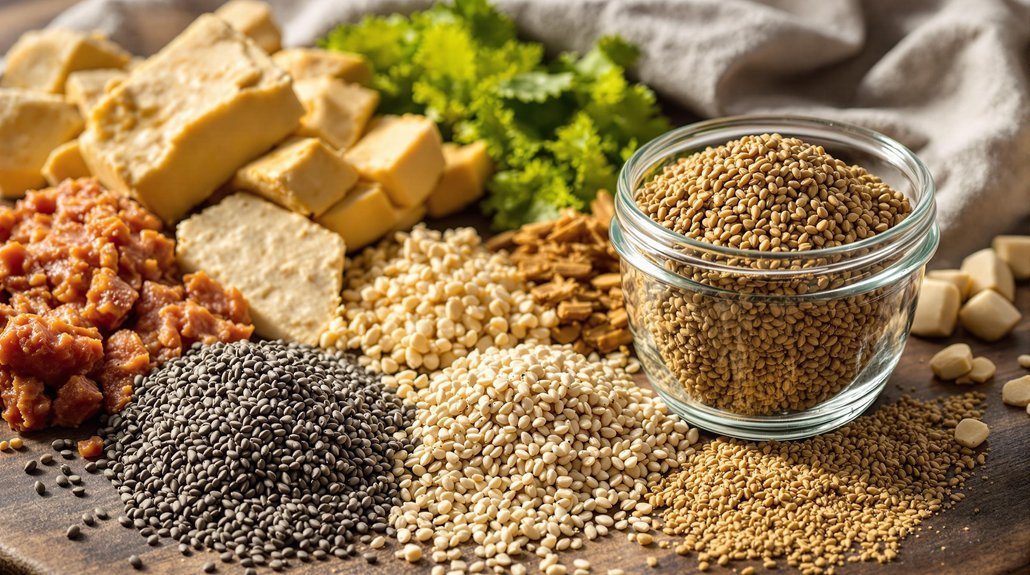
Soy and soy products are at the forefront of high-quality vegan protein sources. Among these, tofu, tempeh, and edamame stand out for their exceptional protein content and health benefits.
Tofu, a versatile and flavorful food, offers about 16.5 g of protein per 100 g, making it an excellent choice for vegans.
Tempeh, being a fermented soy product, not only provides a higher protein content of approximately 20.7 g per 100 g but also includes probiotics, B vitamins, and minerals that support digestion and overall health.
Edamame, or young soybeans, contains 11 g of protein per 100 g when cooked and is also rich in fiber, folate, and healthy fats.
These soy products are complete proteins, providing all nine essential amino acids necessary for the body's functions, making them an ideal protein source for vegans.
Seitan: A Gluten-Based Protein Source
Seitan is a valuable protein source due to its low carbohydrate and fat content.
However, it's essential to note that while it provides a significant amount of protein, it may be low in certain essential amino acids. Consequently, combining it with other protein sources guarantees a balanced diet.
For those with gluten sensitivity or celiac disease, seitan isn't a suitable option, but for others, it offers a high-protein alternative in a vegan diet.
Legumes: Beans, Lentils, and Chickpeas
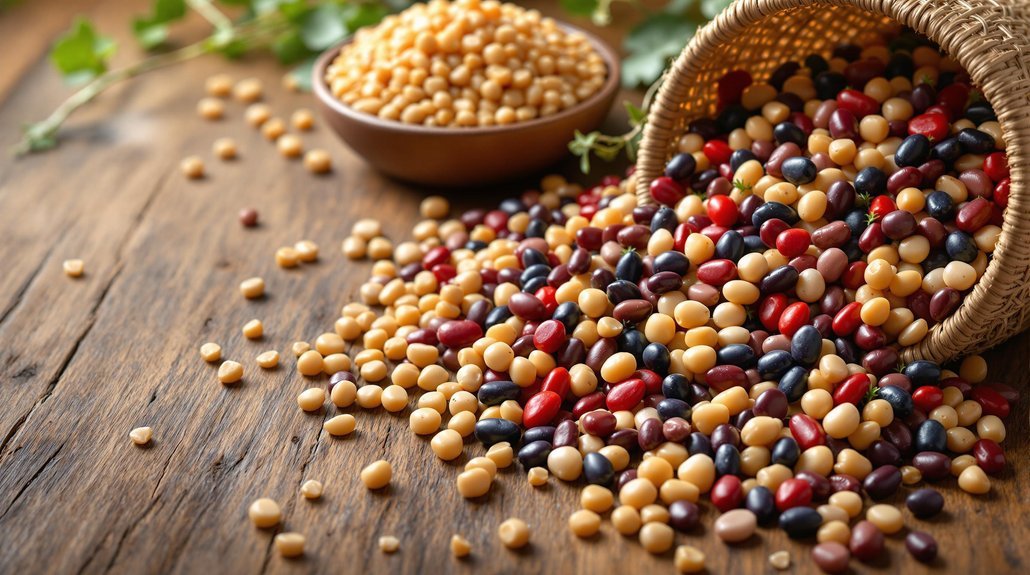
In the domain of plant-based diets, legumes stand out as a cornerstone for ensuring adequate protein intake. They're incredibly versatile ingredients that can be used in a wide range of dishes, from tacos and stews to curries and salads.
Beans, lentils, and chickpeas aren't only high in protein but also rich in fiber, iron, and essential nutrients that contribute to digestive health and overall well-being. For instance, cooked lentils provide about 18 grams of protein per cup, while black beans offer 15 grams per cup and chickpeas contain approximately 14.5 grams per cooked cup.
Furthermore, these legumes are budget-friendly, making them a staple in many plant-based diets and a great choice for those seeking to increase their protein intake without animal products.
Nuts and Seeds: High-Protein Options
- *Hemp seeds* provide approximately 30 grams of protein per 100 grams and contain all nine essential amino acids, making them a complete protein source.
- *Pumpkin seeds* contain about 24.4 grams of protein per 100 grams and are rich in minerals like magnesium and iron.
- *Chia seeds* offer around 16.5 grams of protein per 100 grams and are high in omega-3 fatty acids and fiber.
Almonds and peanuts also serve as excellent protein sources, with almonds delivering 21.2 grams per 100 grams and peanuts providing 25.8 grams.
These nuts and seeds offer not only high amounts of protein but also a myriad of other nutrients, making them indispensable for vegan diets.
Whole Grains: Complete Proteins
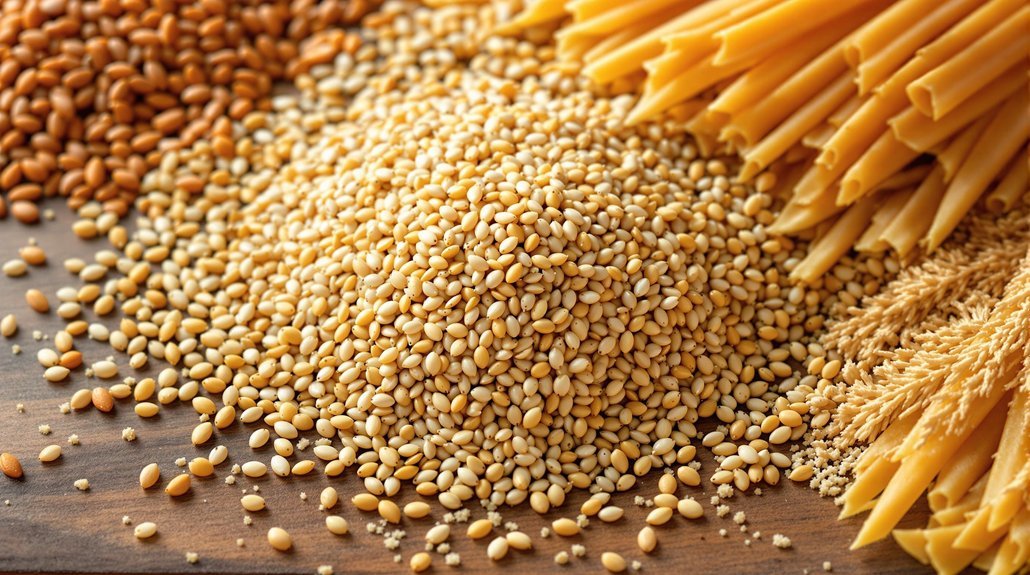
Whole grains are an essential component of a balanced vegan diet, and some of these grains stand out for their exceptional protein content. Quinoa and amaranth are prime examples, offering approximately 8-9 grams of protein per cooked cup.
These whole grains are considered complete proteins because they contain all nine essential amino acids necessary for human health. They're also rich in dietary fiber, magnesium, and iron, contributing greatly to overall nutrient intake.
Combining these whole grains with legumes can enhance the overall protein quality of a meal, ensuring a well-rounded amino acid profile. This strategy is key for vegans seeking to maximize their protein intake from plant-based sources.
Green Veggies and Leafy Greens
Key examples of high-protein green vegetables include:
- *Spinach and green peas* offer considerable protein, with approximately 5 g and 9 g per cooked cup, respectively.
- *Asparagus and broccoli* provide around 4 g of protein per cooked cup and are packed with vitamins and fiber.
- *Brussels sprouts* offer about 2 g of protein per cooked half-cup serving, rich in antioxidants and fiber.
Incorporating these green vegetables into our meals can greatly enhance our daily protein intake, while also providing essential vitamins and minerals.
Mycoprotein and Spirulina: Microbial Protein Sources
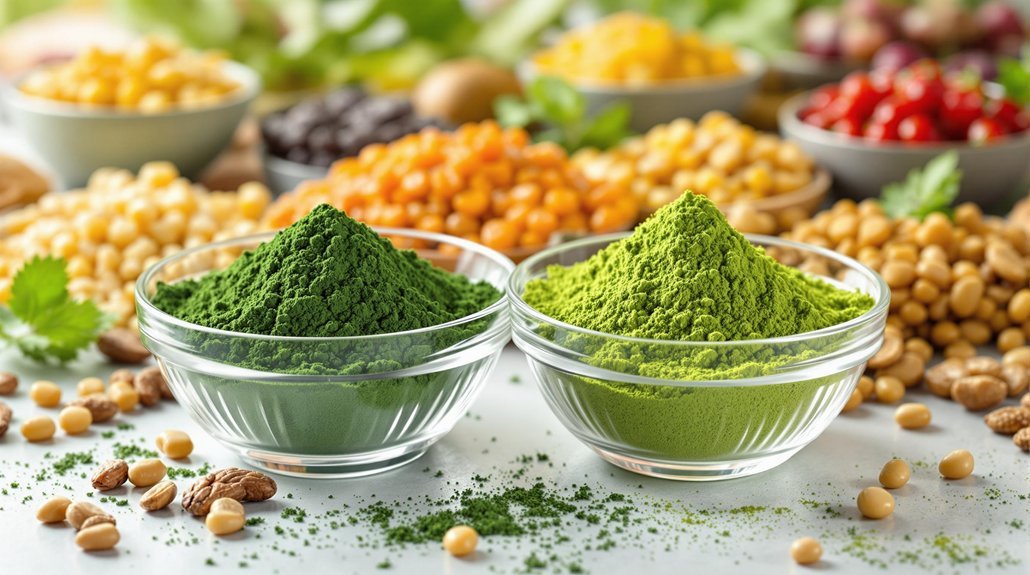
Spirulina provides about 8 grams of complete protein per 2 tablespoons (14 g), making it a highly nutritious supplement.
It covers 22% of daily iron and 95% of daily copper needs, highlighting its nutritional density.
Additionally, spirulina is known for its antioxidant properties and additional vitamins, including B vitamins (excluding B-12).
Processed Foods and Vegan Alternatives
Some notable examples of processed vegan protein sources include:
- *Mycoprotein (e.g., Quorn)*, providing around 15–16 g of protein per 3.5 oz (100 g) serving.
- *Nutritional yeast*, containing about 8 g of protein per 2 tablespoons and often fortified with B vitamins, including B12.
- *Processed vegan snacks and protein bars*, which can offer protein content comparable to whole food sources but may also be high in calories and low in other essential nutrients if not chosen carefully.
It's vital to monitor the ingredient lists of these foods to guarantee they're nutrient-dense and free from unhealthy additives.
Planning a Balanced Vegan Diet**
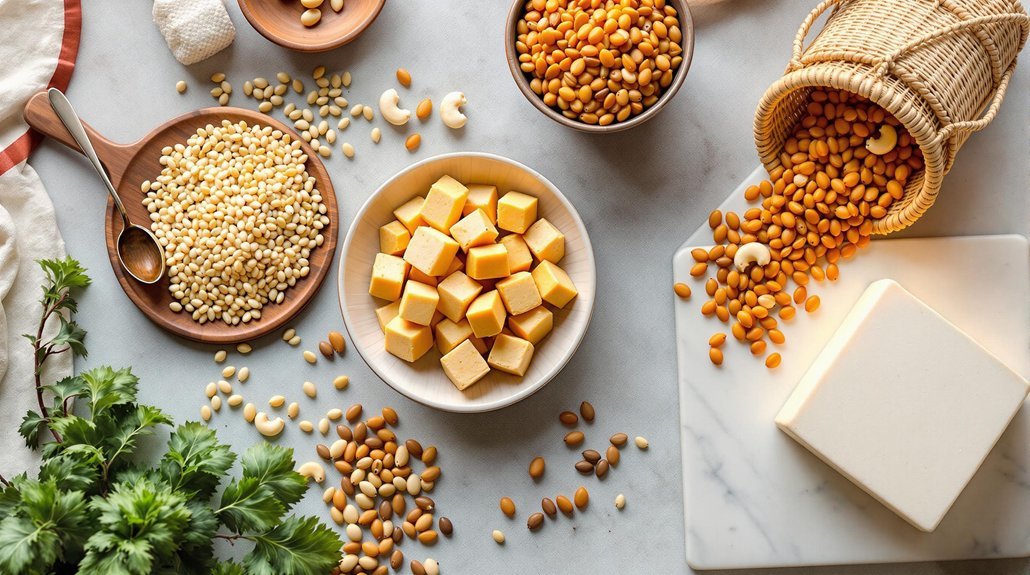
Planning a balanced vegan diet involves carefully selecting a variety of high-protein foods from different plant-based sources. To guarantee adequate protein intake, we must incorporate a mix of protein sources such as legumes, soy products, whole grains, nuts, and seeds into our diets.
For instance, lentils and tempeh offer substantial protein content, with approximately 18 g and 20.7 g of protein per cooked cup and 100 g, respectively. Combining these with other foods like whole grains and nuts helps create a complete amino acid profile.
High-protein vegetables like green peas and fortified foods like nutritional yeast also contribute greatly to our protein needs. Effective meal planning around these diverse sources is essential for maintaining peak protein intake in vegan diets.
In Closing
Wrapping Up the Best Vegan Protein Sources****
We've covered the cream of the crop in vegan protein sources, from soy and seitan to legumes, nuts, seeds, and beyond. The key to a balanced vegan diet is variety, so "mix and match" these options to meet your daily protein needs. Incorporate whole grains, green veggies, and leafy greens for added nutritional benefits. With a little planning, you can easily reach your protein goals and enjoy a healthy, thriving vegan lifestyle.